
Noble Metal Thermocouples — Type R, S & B
Type R, S, and B noble-metal thermocouples for furnace, heat treat, aerospace, and calibration-critical programs.
Product Overview
Noble Metal Thermocouples — Type R, S & B
Type R, S, and B noble-metal thermocouples are typically higher-cost assemblies used when high-temperature stability, laboratory work, furnace control, or calibration-critical measurement justifies platinum-rhodium thermocouple materials.
Noble-Metal Probe Protection Strategy
Noble-metal builds are specified around the protected tip, ceramic insulation system, and contamination control needed for furnace and heat-treat service.
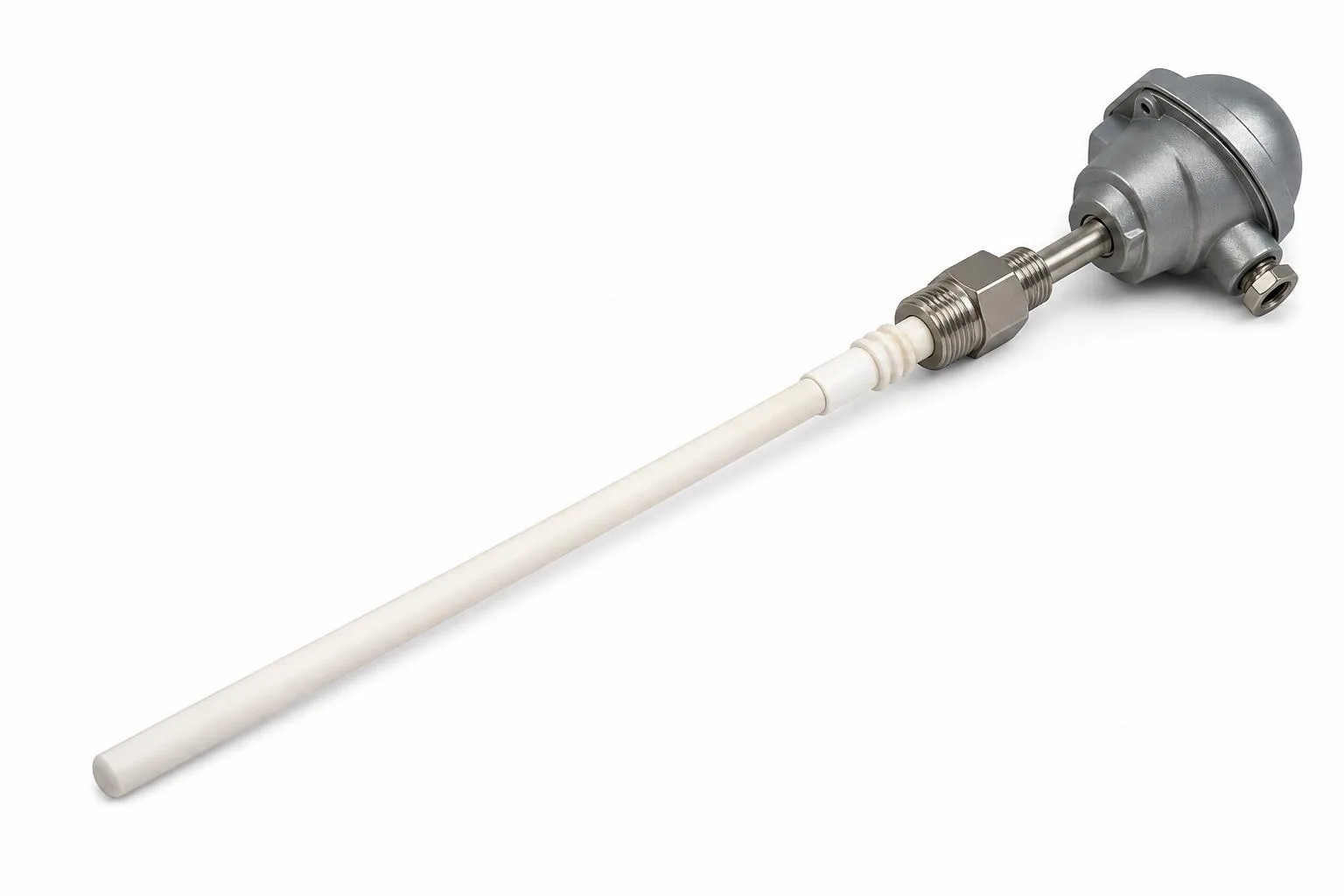
Protected Ceramic-Tip Style
Use this protected-tip geometry when high-temperature stability and contamination control matter more than compact package size.
Noble Metal Assembly Types
Type R, Type S, and Type B Materials
Noble-metal thermocouples use platinum and platinum-rhodium conductor combinations. Type R uses a platinum-rhodium positive leg with a platinum negative leg. Type S also uses a platinum-rhodium positive leg with a platinum negative leg, with a different rhodium percentage than Type R. Type B uses platinum-rhodium on both legs and is selected for very high-temperature applications where its range and stability fit the process.
When Noble Metal Makes Sense
Because these assemblies use precious-metal conductors, they are usually reserved for labs, high-temperature furnaces, heat-treat programs, calibration-critical applications, and process points where base-metal thermocouples are not the right fit.
Contamination Sensitivity
Noble metal thermocouple wire is extremely sensitive to contamination from metallic vapors, carbon, sulfur, hydrogen, and silicon. Thermometrics uses dedicated handling procedures, dedicated tooling, and protective packaging to prevent contamination during manufacturing. Alumina insulation (not silica) is specified for all noble metal assemblies to prevent SiO₂ reduction at the junction.
Calibration & Recalibration
Need this product configured to your application?
Share the process conditions, geometry, connection details, and documentation requirements. We can help scope the right assembly.