
Averaging Temperature Sensors for Ducts, Tanks, and Process Zones
Thermocouple and RTD averaging assemblies for applications where one fixed sensing point does not represent the full temperature profile.
Product Overview
Thermocouple and RTD Averaging in One Product Family
Averaging sensors measure a zone instead of a single point. Thermocouple averaging uses multiple junctions at defined locations. RTD averaging uses distributed resistance sensing to represent temperature over a length. The right build depends on temperature range, accuracy requirements, response time, control hardware, and where the process is most likely to stratify.
Averaging Sensor Coverage Strategy
Use averaging sensors when airflow stratification, tank gradients, duct size, or equipment geometry makes one tip reading misleading. The goal is a representative control signal from the full measurement zone, not just the hottest or coldest local point.
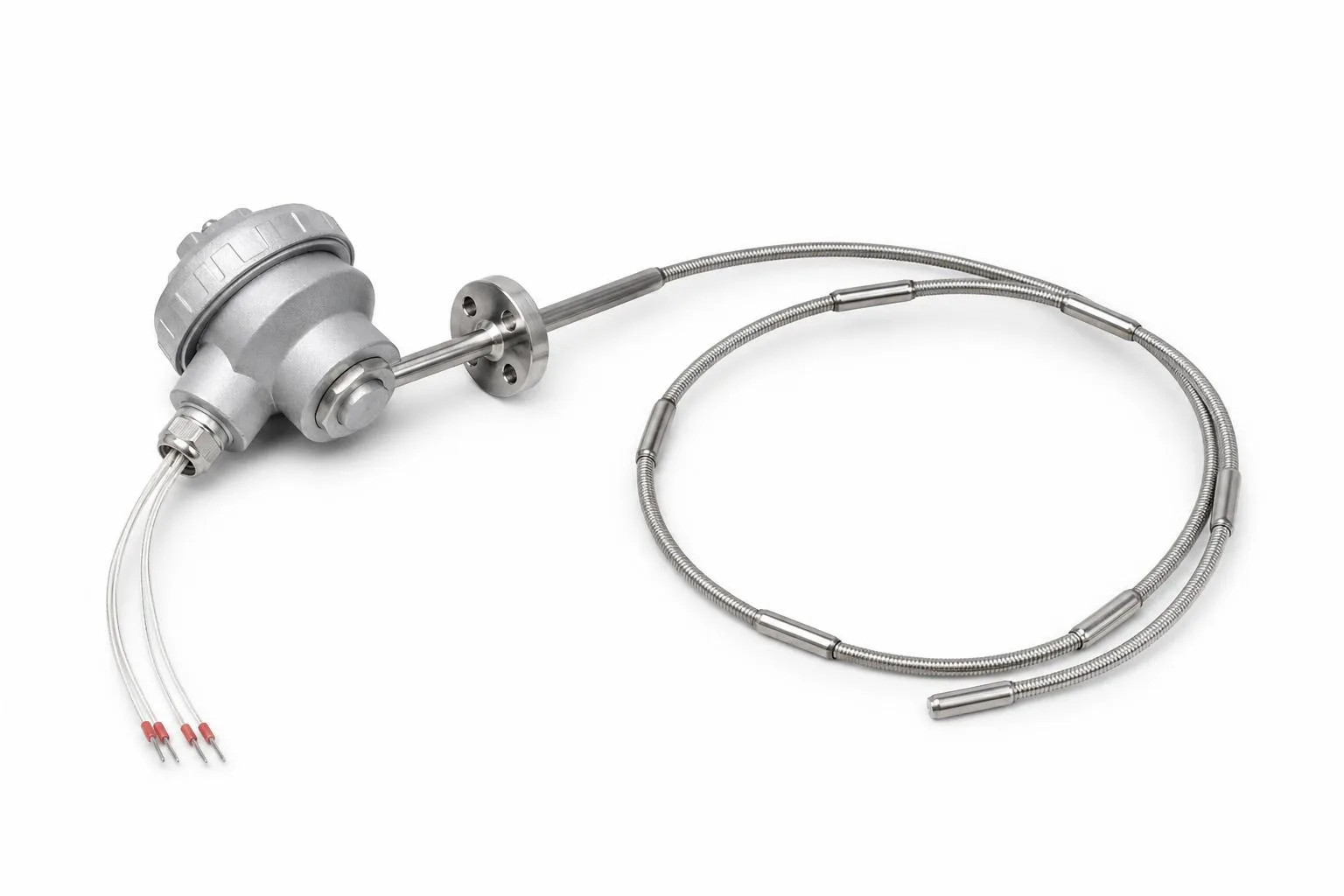
Distributed Measurement Assembly
Use this distributed measurement format for HVAC ducts, air handlers, tanks, and process equipment where the measurement needs to represent a broader zone.
Averaging Sensor Types
Averaging Thermocouple - Multi-Junction
Uses multiple thermocouple junctions along the sensing length. This is a good fit when specific zones, higher temperatures, or existing thermocouple inputs need to be represented in one output.
Averaging RTD - Wound-Wire Element
Uses a resistance element distributed along the sensing length. This is a good fit for HVAC ducts, plenums, tanks, and other applications where RTD stability and full-length zone averaging are priorities.
Rigid Duct Averaging RTD
Uses a stainless probe or capillary for duct and plenum insertion. Common options include flanged or threaded mounting, sealed tip construction, connection head, transmitter, or direct lead exit.
How to Choose
Choose thermocouple averaging when temperature range, ruggedness, or thermocouple input hardware drives the specification. Choose RTD averaging when accuracy, stability, and a broader zone average matter more. Final geometry should be based on duct width, tank depth, airflow pattern, mounting location, and service access.
If the control system can average separate channels, a multipoint thermocouple or multipoint RTD may be the better fit because each point remains visible for diagnostics, troubleshooting, and trend review.
HVAC & Building Automation
Need this product configured to your application?
Share the process conditions, geometry, connection details, and documentation requirements. We can help scope the right assembly.