
Bearing RTDs, Bearing Thermocouples, and Bearing Temperature Sensors
Bearing temperature sensors for rotating machinery protection
Bearing temperature sensors give operators an early warning when lubrication, alignment, load, or cooling problems start driving bearing metal temperature upward.
Thermometrics builds bearing RTDs, Pt100 bearing sensors, Pt1000 bearing sensors, bearing thermocouples, and bearing temperature sensor assemblies for motors, turbines, turbo machinery, pumps, generators, compressors, and other rotating equipment, with case styles, lead exits, armor, and cable routing selected around the actual housing geometry and clearance limits.
In this market, buyers often search by equipment location or machine problem: motor bearing RTD, generator bearing temperature sensor, turbine bearing sensor, pump bearing RTD, compressor bearing sensor, API 670 bearing temperature monitoring, or replacement bearing probe.
In turbine and turbo machinery service, bearing temperature is a protection signal as much as a process reading. Sensor fit, contact pressure, lead protection, and routing through the frame all affect how quickly a protection system can identify lubrication loss, rub, overload, or cooling issues before bearing damage progresses.
Common Configurations
Key Advantages
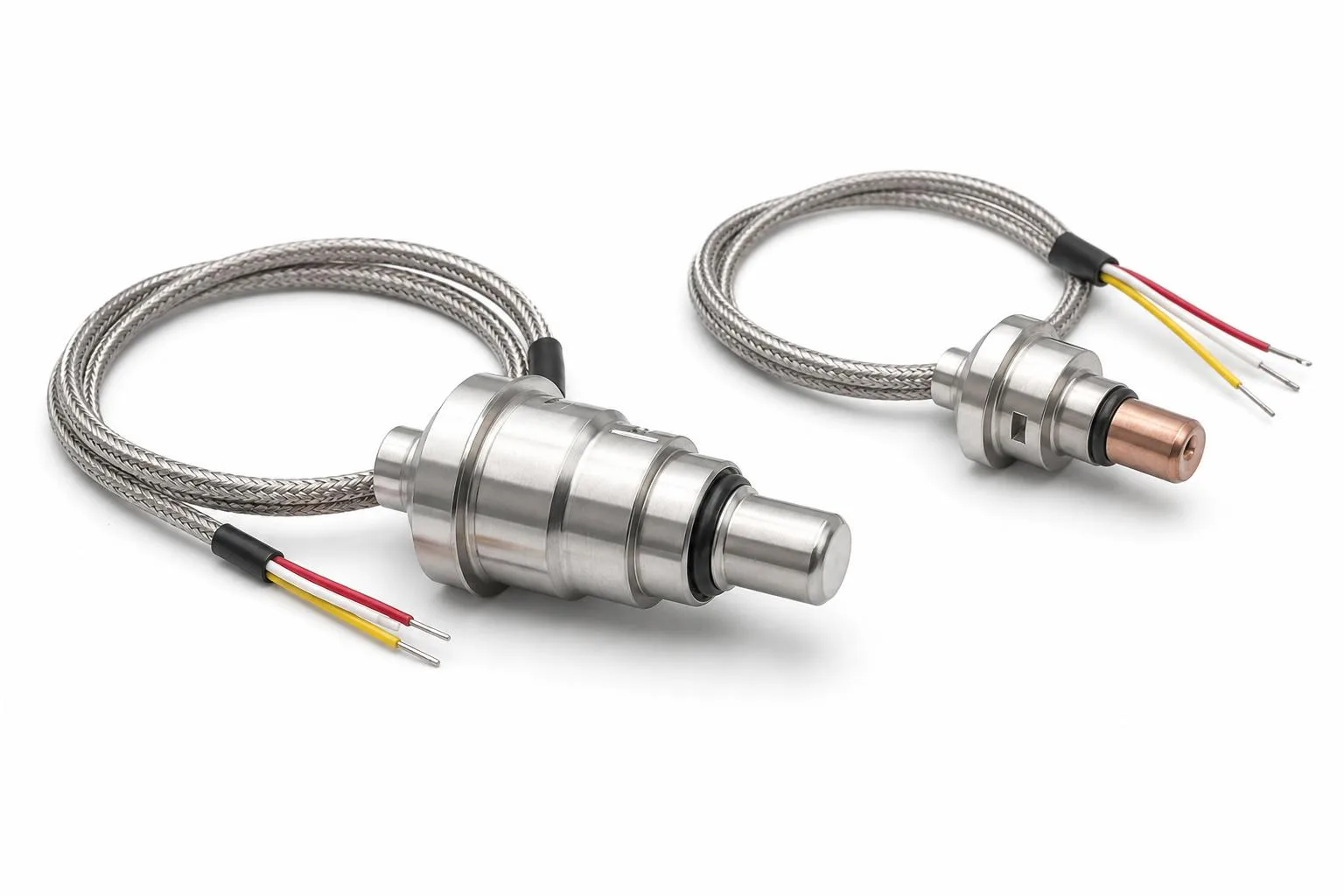
Bearing thermocouple and RTD contact-style sensor examples.
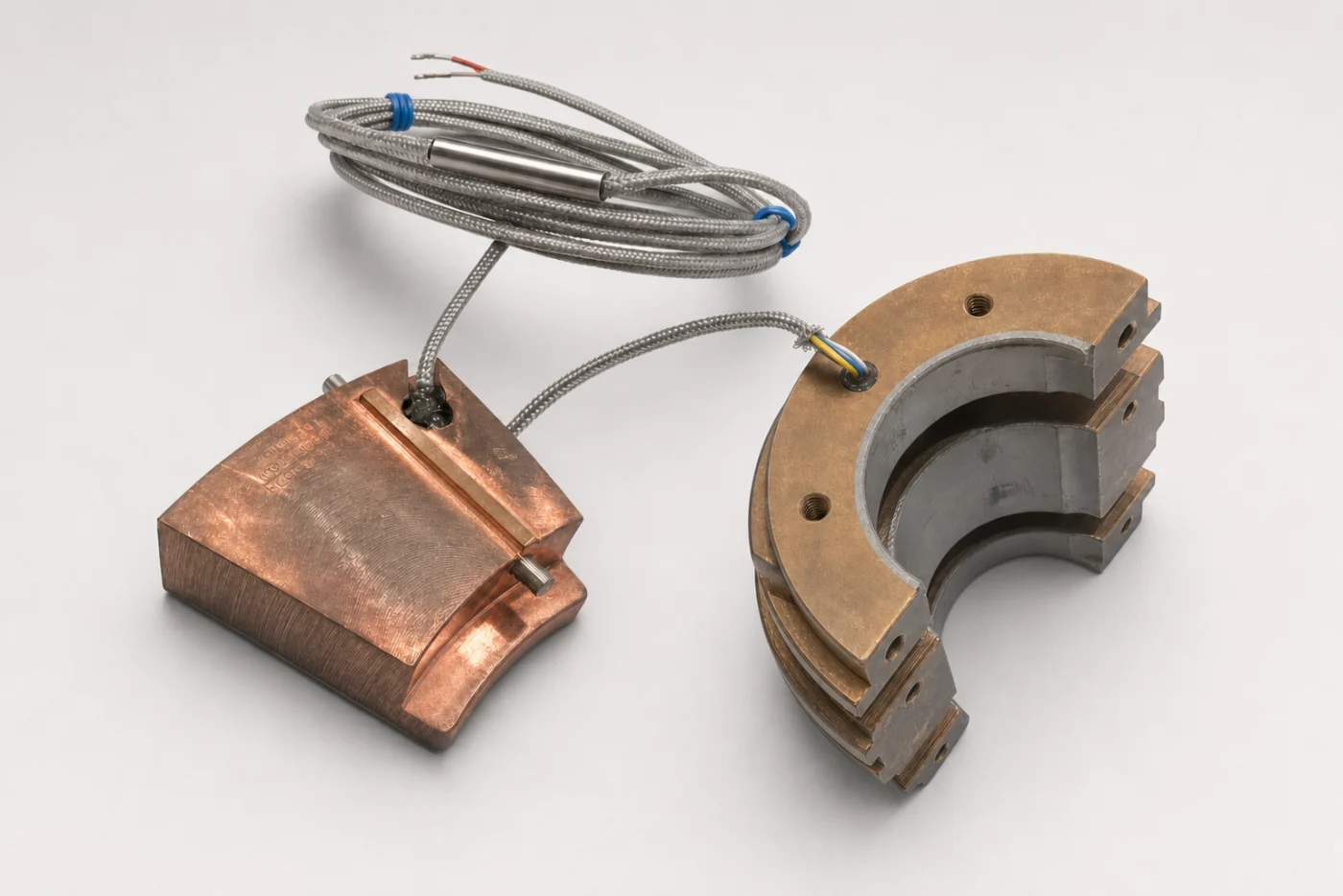
Typical bearing housing inserts and curved bearing-contact builds.
Case Style Types
Bearing Sensor Case Style Guide
Case style is selected from the bearing housing geometry, available insertion depth, contact requirement, and element or wire configuration shown on the drawing or RFQ.
- Type A 0.250 in. L x 0.275 in. Dia. 6.4 mm x 7.0 mm Compact cylindrical case with a short sensor body and larger contact face.
- Type B (Top Hat) 0.250 in. L x 0.188 in. Dia. 6.4 mm x 4.8 mm Spring-loaded top hat case style with external retention hardware for maintained bearing contact.
- Type C 0.300 in. L x 0.125 in. Dia. 7.6 mm x 3.2 mm Small-diameter cylindrical case for narrower bearing housing or bore requirements.
- Type D 0.300 in. L x 0.080 in. Dia. 7.6 mm x 2.0 mm Reduced-diameter probe-style case for limited insertion space and compact single-element builds.
How to Choose the Right Bearing Sensor
Information to Share for Quoting
Browse Bearing Sensor Product Pages
Choose the bearing sensor style that best matches the sensing technology, case style, and machine-protection approach used in your rotating-equipment program.
BTC Bearing Thermocouples
Bearing thermocouple assemblies for motors, turbines, turbo machinery, pumps, fans, gearboxes, and other rotating equipment.
View pageBRTD Bearing RTDs
Platinum 100 ohm (Pt100)-based bearing RTD assemblies for stable machine protection loops and API 670-oriented applications.
View pageIndustries Where Bearing Sensors Are Common
Bearing temperature monitoring is usually tied to rotating-equipment reliability programs in these industries.
Industrial Machinery
Motors, gearboxes, and driven equipment where machine health and replacement fit matter.
View industryEnergy & Power
Fans, pumps, turbine-adjacent equipment, and other critical rotating assets.
View industryAutomotive & EV
Specialized rotating test stands, validation rigs, and machinery temperature points.
View industryRequest a Bearing Sensor Quote
Provide bearing style, mounting method, lead length, range, and preferred sensor type (RTD or TC).