
RTD Sensors, Pt100 Probes, and Platinum Resistance Thermometers
RTDs for stable, repeatable temperature measurement
RTDs use a platinum resistance element whose resistance changes predictably with temperature, making them a strong fit when stability, repeatability, and lower measurement uncertainty matter more than maximum temperature range.
Thermometrics builds Pt100 and Pt1000 RTD assemblies with wire-wound or thin-film elements, 2-wire, 3-wire, or 4-wire terminations, and sheath, fitting, enclosure, and lead configurations selected around the installation and accuracy target.
Depending on the industry, the same sensor family may be called an RTD sensor, RTD probe, Pt100 probe, Pt1000 sensor, resistance thermometer, platinum resistance thermometer, PRT, temperature probe, or custom temperature sensor assembly.
Key Advantages
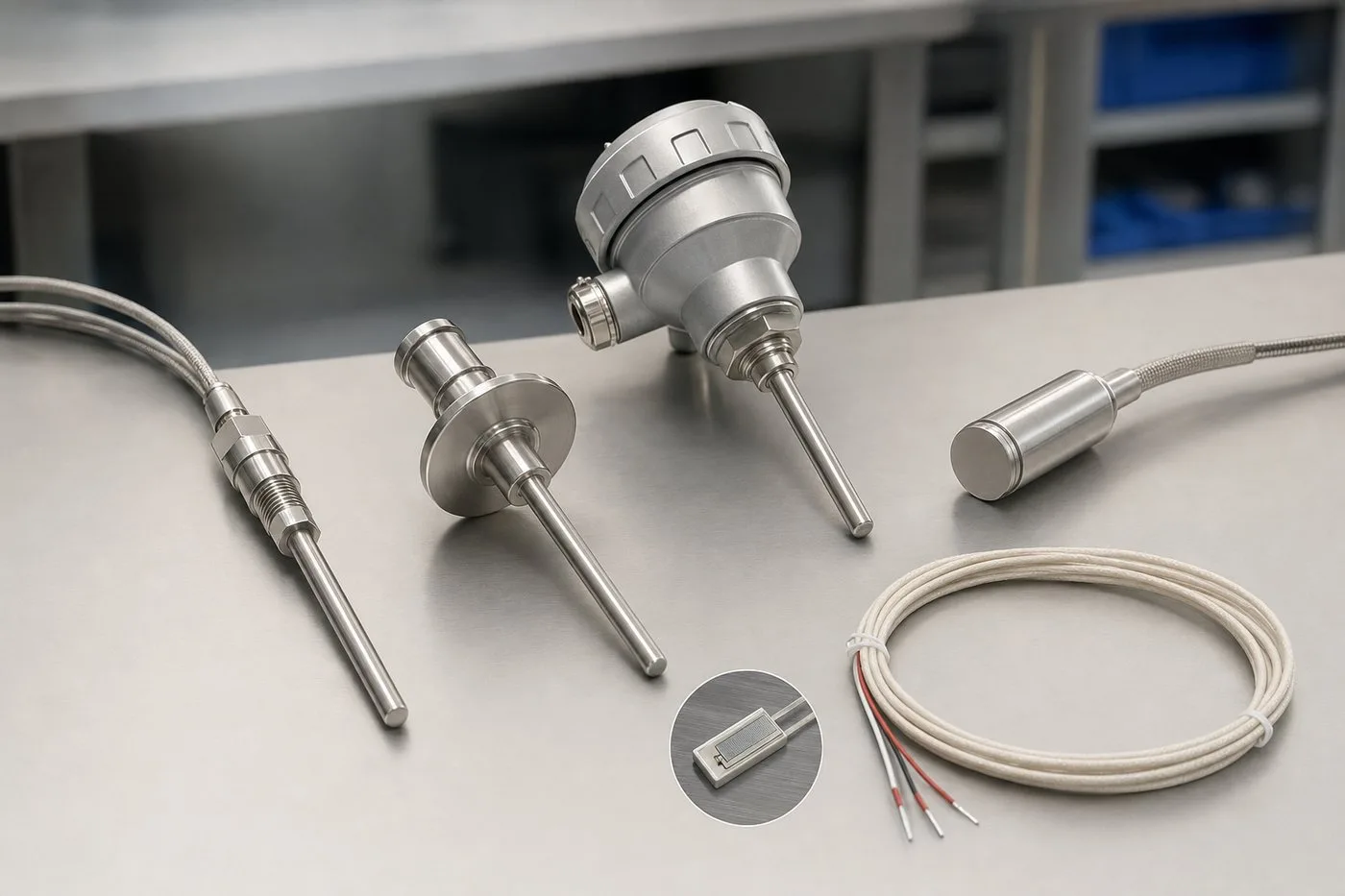
Common RTD formats for process insertion, head-style service, OEM packaging, surface measurement, and lead-wire element builds.
Wiring Options
RTD naming guide for engineers, buyers, and maintenance teams
Use the language below to connect the sensor name to the buying problem. Controls teams often care about Pt100 or Pt1000 input matching, calibration teams may say PRT, and maintenance teams usually describe the physical probe or the machine location.
| Buyer language | What it usually means | Common page to start with |
|---|---|---|
| Pt100 or Pt1000 | Platinum RTD element resistance needed to match a PLC, transmitter, controller, or data logger input. | Pt100 vs Pt1000 |
| RTD probe | A physical probe with a sensing element inside a sheath, usually specified by length, diameter, fitting, lead, and termination. | Immersion RTD probes |
| PRT or platinum resistance thermometer | Precision or calibration-oriented language for platinum RTD measurement. | PRT vs RTD |
| Bearing RTD, winding RTD, or stator RTD | A machine-location temperature sensor for rotating equipment, motors, generators, or embedded machine protection. | Bearing RTDs |
2-Wire, 3-Wire, and 4-Wire RTD Wiring
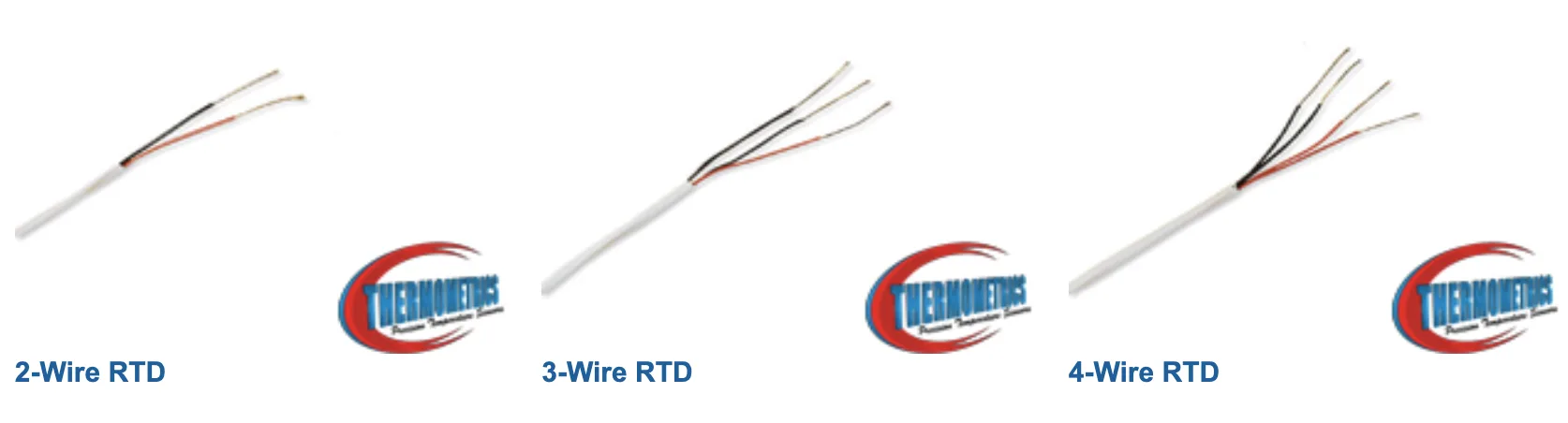
The main difference between these wiring methods is how lead resistance is handled. Short runs and basic instrumentation can often use 2-wire RTDs, while plant-standard control loops usually move to 3-wire, and the highest-accuracy measurement programs use 4-wire configurations.
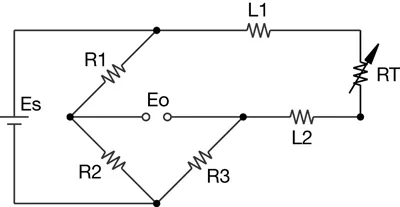
2-Wire RTD
Simplest connection style. Best for short lead lengths and applications where a small amount of added lead resistance is acceptable.
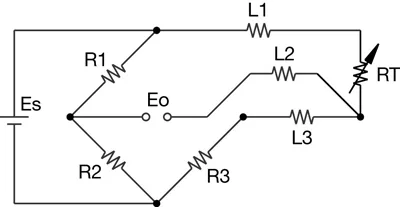
3-Wire RTD
Most common plant configuration. It helps compensate for lead resistance and fits many PLC, DCS, and transmitter input schemes.
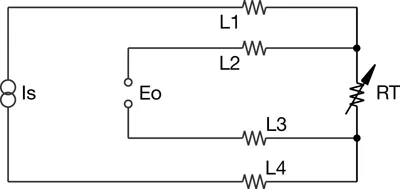
4-Wire RTD
Highest-accuracy arrangement for longer runs, calibration work, and metrology-oriented measurement where lead resistance needs to be removed from the reading.
Wire-Wound and Thin-Film RTD Elements
RTD performance starts with the sensing element. Thin-film elements support compact, fast-response builds; wire-wound elements are used when stability, temperature range, or specific mechanical fit matters most.
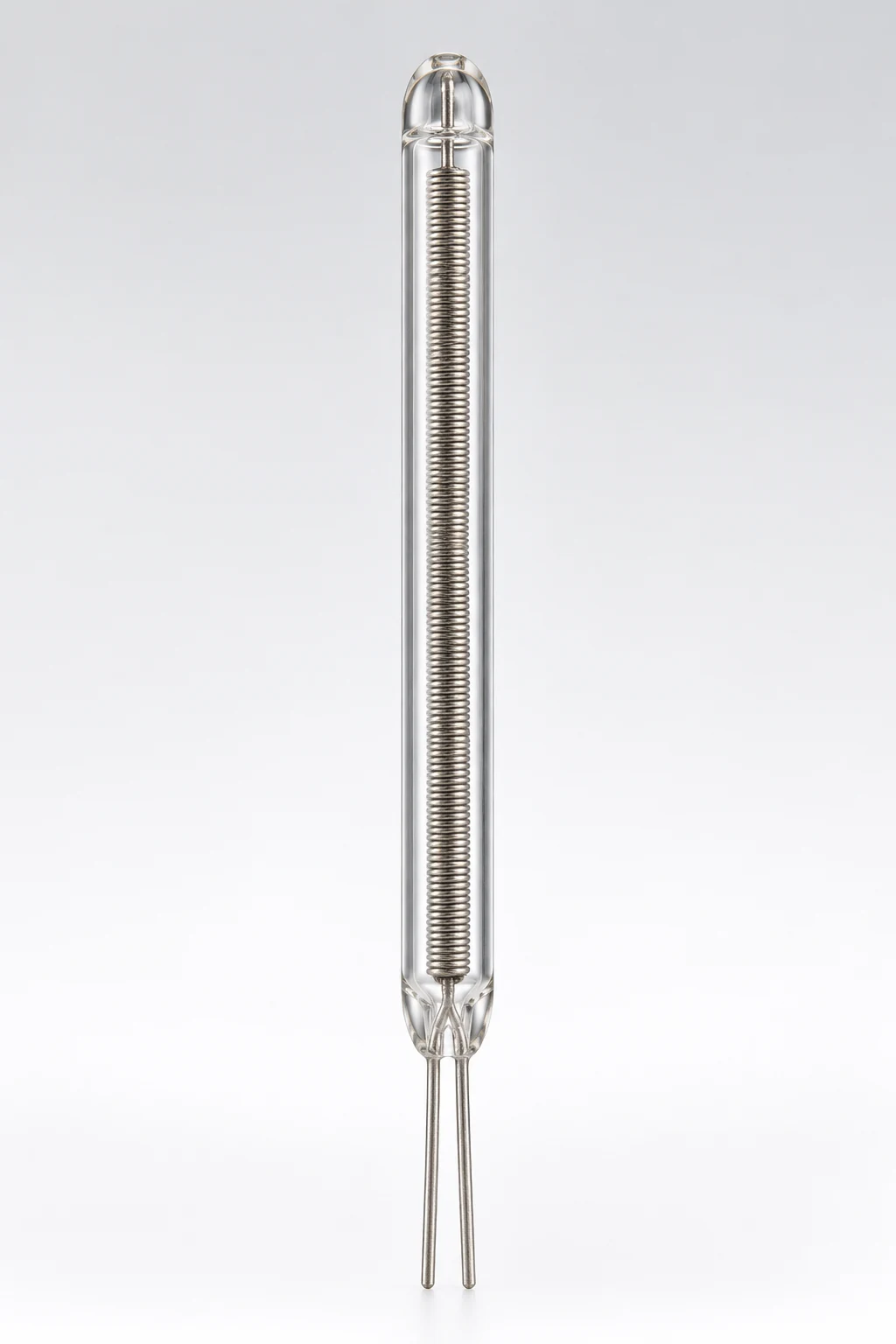
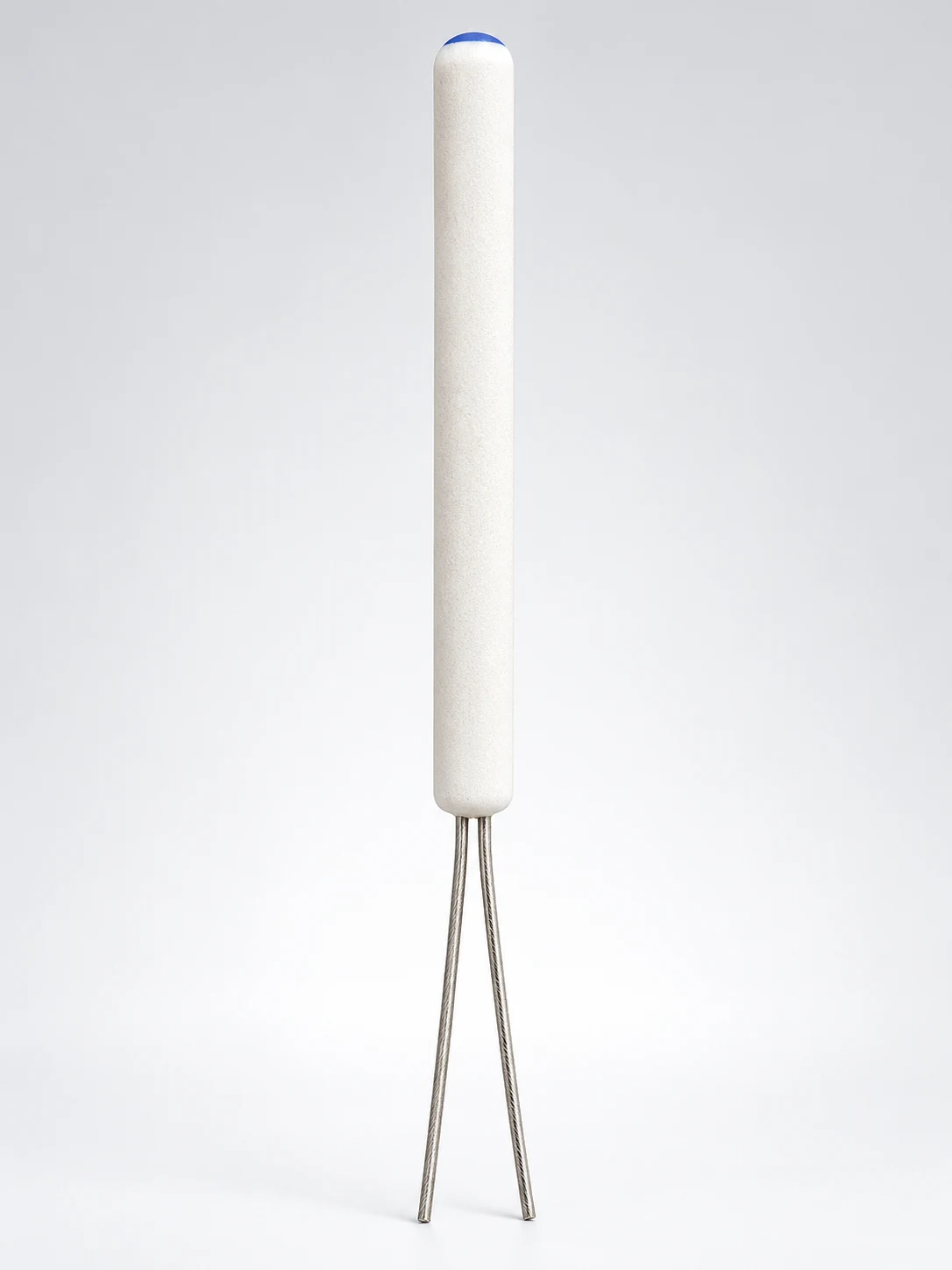
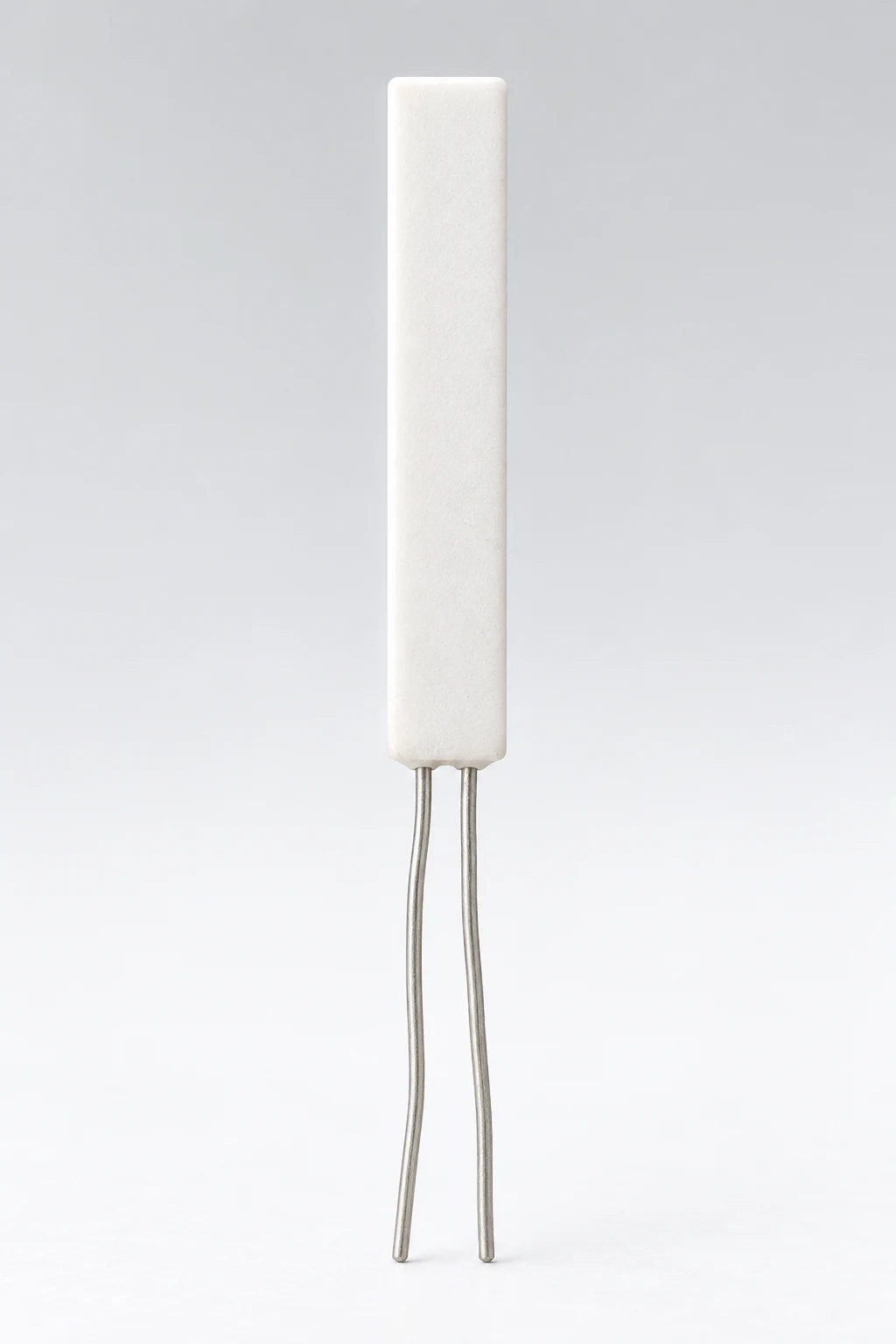
Wire-Wound Elements
Glass and ceramic encapsulation styles support broader temperature capability, long-term stability, and application-specific mechanical fit.
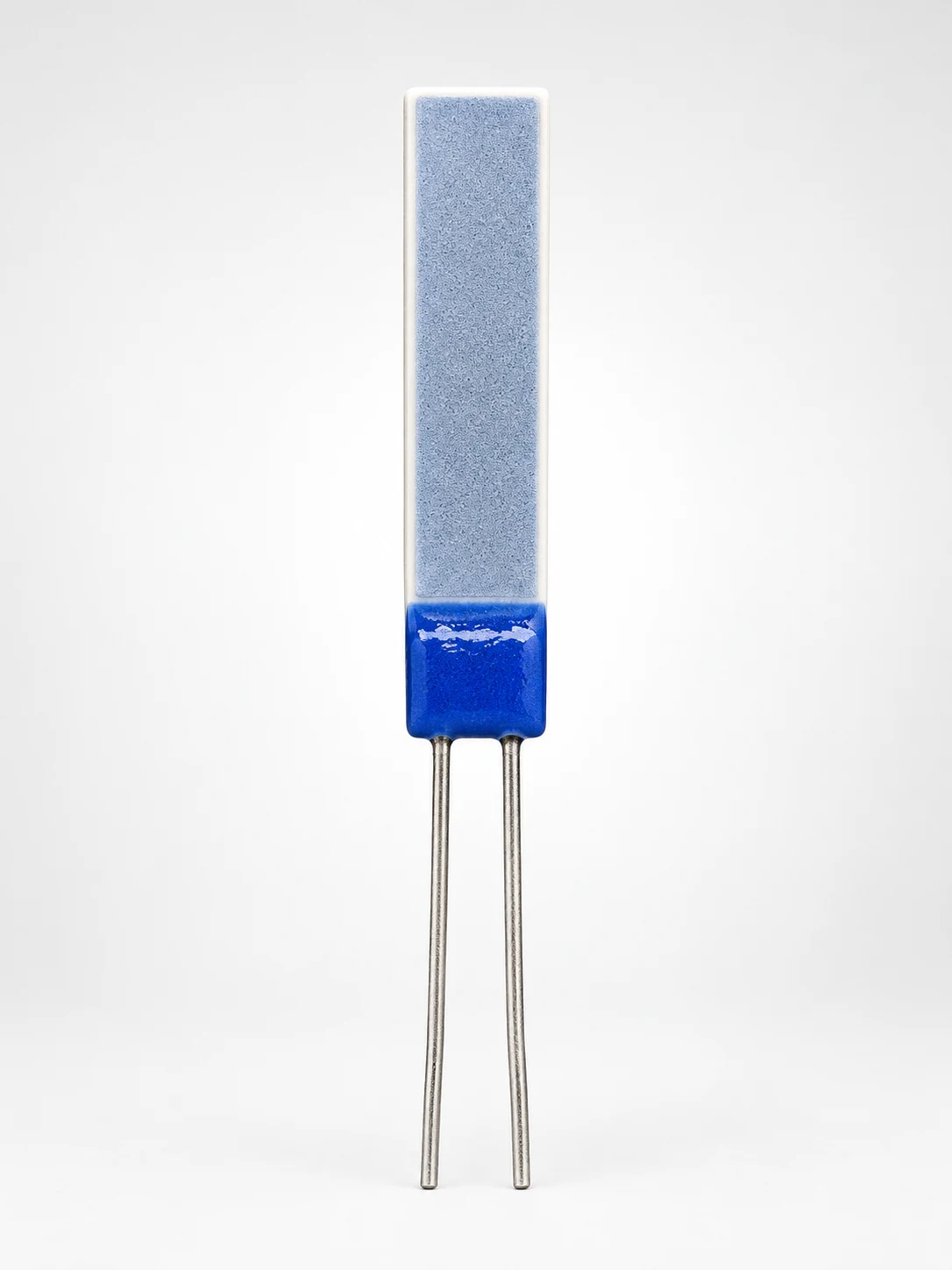
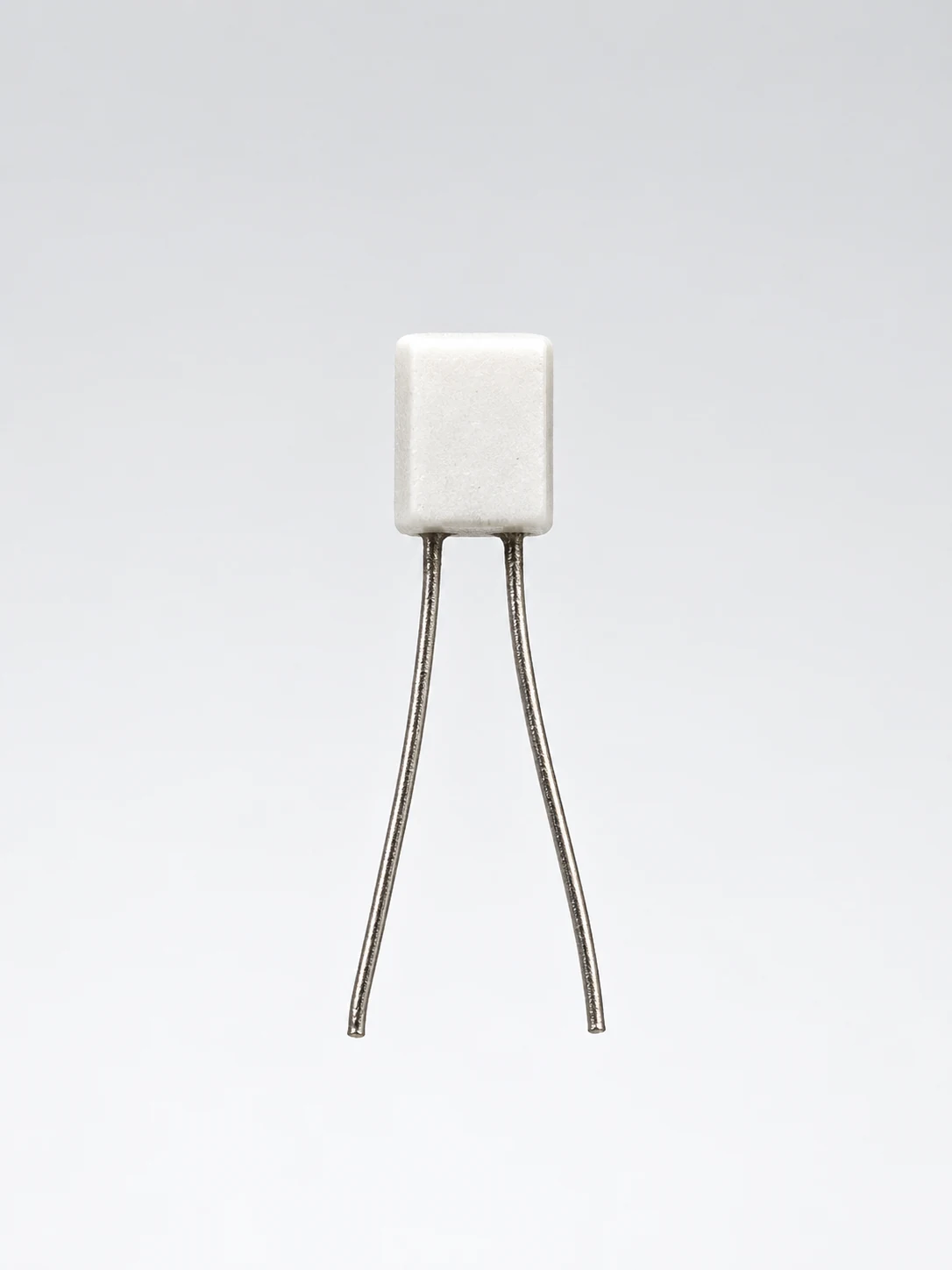
Thin-Film Elements
Front, reverse, and miniature formats illustrate the compact ceramic construction used where smaller package size and faster response are priorities.
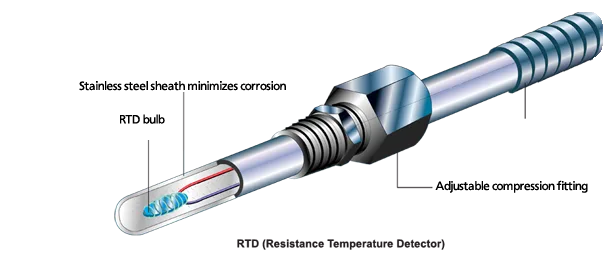
Internal Construction
Cutaway view showing how the sensing element sits within the insulated probe body before the finished RTD is fitted with a head, cable, or process connection.
Element & Accuracy Options
Compare RTD accuracy classes for Class AA, Class A, and Class B element selection.
Application Coverage
Browse RTD Product Pages
Select the RTD construction by installation style: direct insertion, head-style process service, thermowell mounting, sanitary service, surface contact, compact packaging, multipoint profiling, or bare element integration.
Insertion & Process RTDs
For direct insertion, plant process service, and maintainable thermowell-based installations.
Immersion RTD Probes
Direct-insertion platinum 100 ohm (Pt100) and platinum 1000 ohm (Pt1000) probes with custom immersion lengths and fittings.
View pageIndustrial Head RTDs
Process temperature assemblies with RTD or thermocouple sensing, terminal heads, transmitter options, and replaceable inserts.
View pageThermowell-Mounted RTDs
Spring-loaded RTD assemblies sized for serviceable thermowell installations.
View pageSanitary & Clean Process
For hygienic systems, washdown environments, and process equipment with cleanability requirements.
Sanitary RTDs
Tri-clamp and hygienic-thread RTDs for food, beverage, pharma, and biotech service.
View pageSurface, Retrofit & Compact
For external contact sensing, retrofit installation, and tight-space instrumentation packages.
Surface Mount RTDs
Weld-pad, magnet, and ring-lug RTDs for surface and equipment temperature.
View pageMiniature & Needle RTDs
Small-OD RTD probes for instrumentation, validation, clean fixtures, and other tight-space installations.
View pageProfiling & Components
For temperature mapping, multi-zone studies, and component-level RTD build requirements.
Multipoint RTDs
Profiling and multi-zone RTD assemblies for coordinated temperature mapping.
View pageAveraging Sensors
Wound-wire RTD and multi-junction thermocouple averaging assemblies for ducts, plenums, tanks, and distributed measurement zones.
View pageDuplex / Dual-Element Assemblies
RTD/RTD and mixed TC/RTD assemblies for redundant precision measurement, validation channels, and split control/alarm instrumentation.
View pageResistance Elements
Wire-wound and thin-film platinum 100 ohm (Pt100) and platinum 1000 ohm (Pt1000) element coverage for custom assemblies.
View pageRTD selection guides
These guides explain the terms buyers use when specifying RTD sensors, Pt100 probes, Pt1000 sensors, PRTs, and custom RTD assemblies.
Pt100 vs Pt1000
Compare 100 ohm and 1000 ohm platinum RTD sensors for controller input matching and replacement work.
Read guidePRT vs RTD
Understand how PRT, RTD, resistance thermometer, Pt100, and Pt1000 language overlaps.
Read guideCustom RTD Manufacturer
Review custom RTD assembly options for probes, thermowells, sanitary builds, bearing sensors, and OEM work.
View custom RTDsWinding & Stator RTDs
Review embedded RTD language used in motors, generators, windings, stators, and machine protection systems.
Read guideIndustries Where RTD Assemblies Are Common
RTD assemblies are commonly specified where repeatability, calibration traceability, and long-term stability matter across regulated process systems, utility loops, OEM equipment, and environmental monitoring.
Pharma & Biotech
Sanitary, validation, and precision RTD assemblies for documented process systems.
View industryHVAC & Refrigeration
Insertion, clamp-on, and averaging-oriented RTD use across ducts, coils, and utility loops.
View industryFood & Beverage
Hygienic process RTDs and utility-side measurement in cleanable production environments.
View industryRequest an RTD Quote
Send your range, environment, mounting method, and lead requirements. We’ll spec the right build.