
Immersion RTD Probes, Pt100 Probes, and Pt1000 Sensors
Direct insertion RTD probes for process liquids, gases, tanks, pipes, and OEM equipment with custom lengths, fittings, leads, and connector options.
Product Overview
Immersion RTD probes for direct process measurement
Immersion RTD probes place a Pt100 or Pt1000 sensing element inside a protective sheath for direct insertion into a pipe, vessel, tank, chamber, or machine. Buyers may describe the same part as a stainless steel RTD probe, Pt100 temperature probe, Pt1000 probe, resistance thermometer, or custom temperature sensor.
Immersion RTD Insertion Design
Immersion RTDs are specified around insertion depth, sheath diameter, process fitting, lead termination, and the measurement point inside the pipe, vessel, tank, or equipment. The word probe usually means the RTD element is packaged inside a protective metal sheath rather than supplied as a bare sensing element.
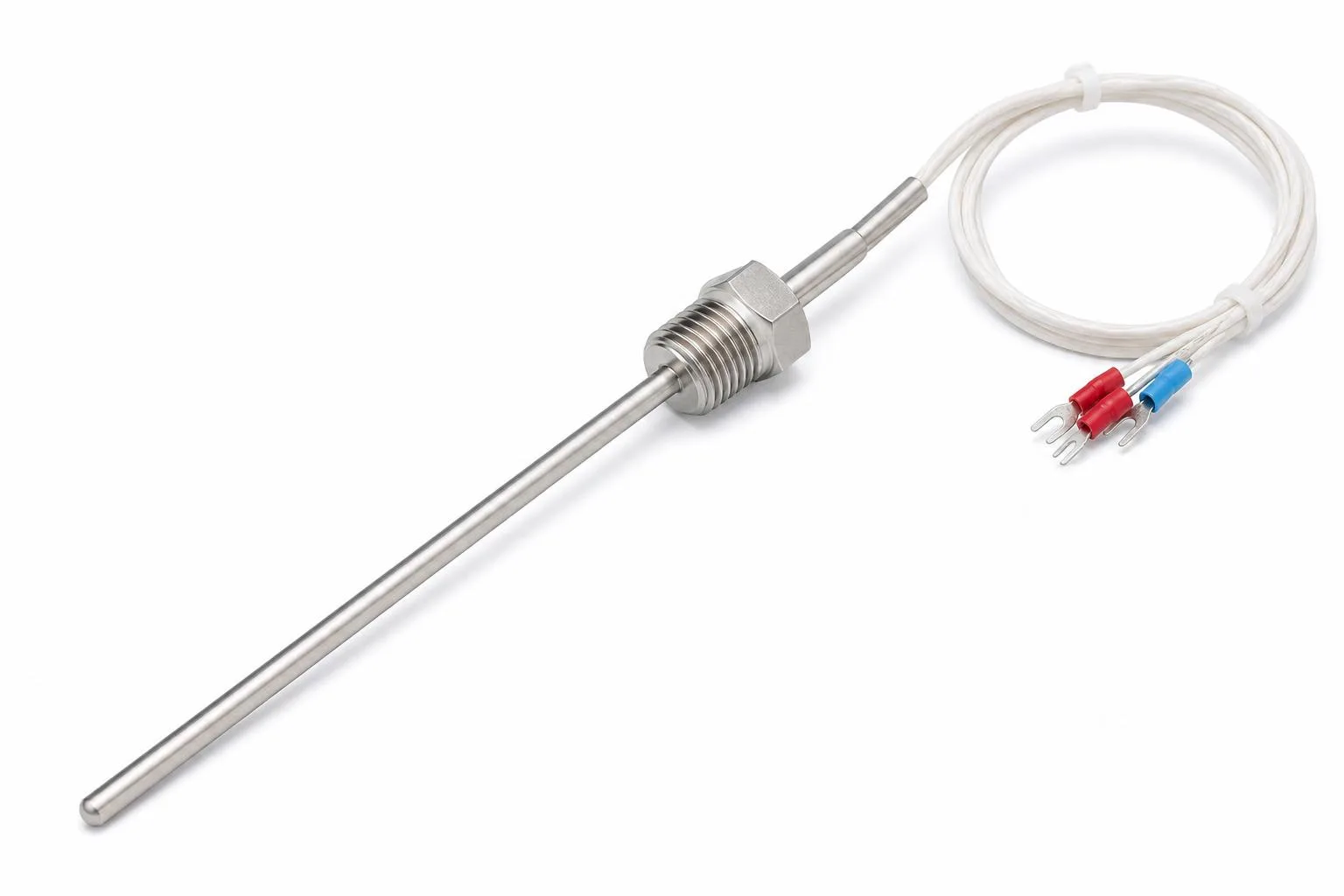
Direct Insertion RTD
Use this direct-insertion RTD build for liquids, gases, and utility service where insertion depth and process fitting define the mechanical fit.
RTD Probe Specification Drivers
Accuracy Class at Key Temperatures
At 0°C
Class AA: ±0.10°C
Class A: ±0.15°C
Class B: ±0.30°C
At 100°C
Class AA: ±0.27°C
Class A: ±0.35°C
Class B: ±0.80°C
4-Wire vs 3-Wire
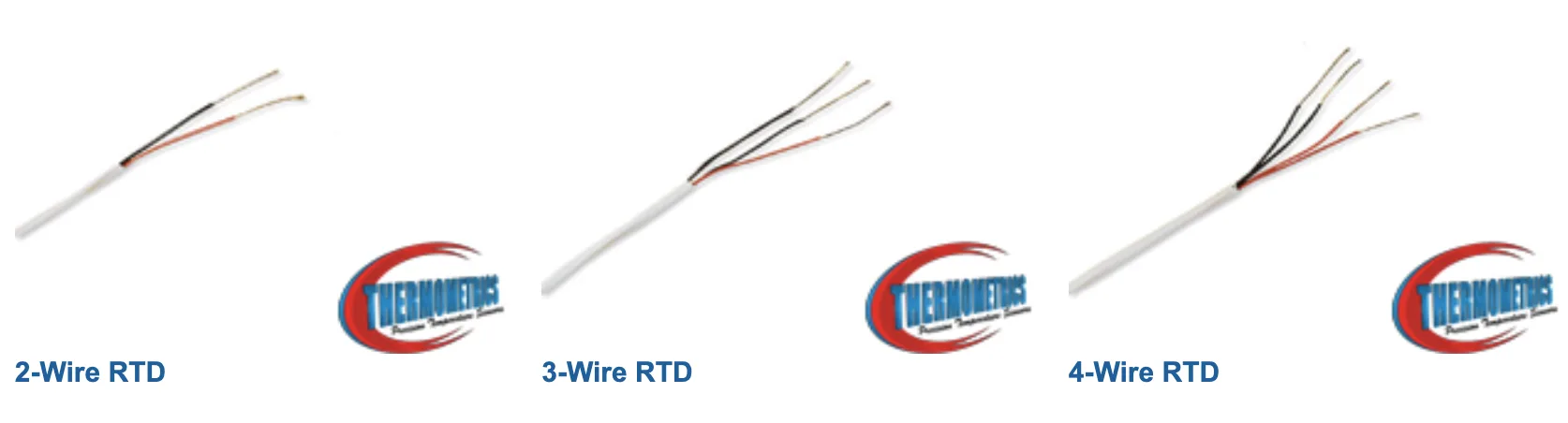
2-Wire, 3-Wire, and 4-Wire Wiring Reference
2-wire is the simplest connection, 3-wire is the common industrial balance of cost and accuracy, and 4-wire removes lead resistance for the best measurement performance.
4-Wire Configuration
Eliminates lead resistance entirely for the highest measurement accuracy.
Best for laboratory, metrology, and longer cable runs.
3-Wire Configuration
Compensates for lead resistance when the leads are balanced.
Well suited to most industrial DCS and PLC applications.
When to Specify 4-Wire
Use 4-wire when maximum accuracy is required or when lead length exceeds 10 meters.
Need this product configured to your application?
Share the process conditions, geometry, connection details, and documentation requirements. We can help scope the right assembly.