
Automotive & EV
Automotive & EV Temperature Sensors
Automotive and EV programs need sensors that respond quickly, survive vibration, and fit prototype, validation, and production-intent hardware. Thermometrics supports battery, power electronics, powertrain, drivetrain, and test-cell work with RTD and thermocouple assemblies built around the measurement point.
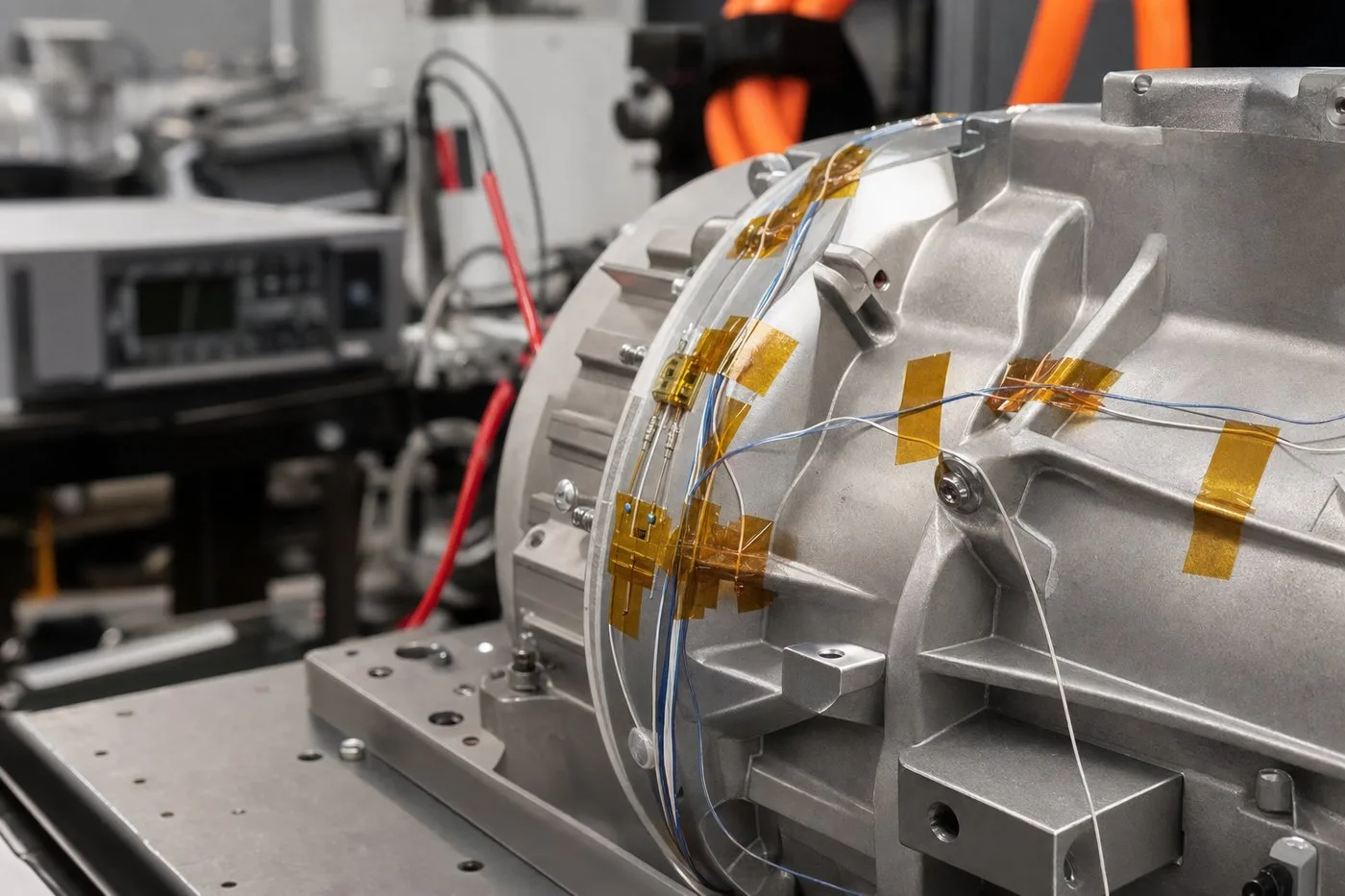
Thermal validation on packs, busbars, inverters, and powertrain builds
Low-mass thermocouples and surface RTDs are mounted to battery modules, busbars, inverters, motors, and powertrain test hardware for prototype validation, thermal mapping, abuse testing, and durability work.
Common Applications
Sensor Solutions
Quality & Compliance
Programs often need repeatable builds, lot traceability, and calibration or inspection reporting so sensors can move from prototype learning to validation and recurring test use with less variation.
Fast Response
Transient thermal events in battery, drivetrain, and exhaust programs.
Mechanical Fit
Compact probes, surface sensors, and custom routing for tight hardware.
Validation Support
Repeatable builds and calibration support for dyno and qualification work.
Program Considerations
Recommended Sensor Products
Tell us about your application
We will recommend the right sensor, mounting method, and materials for your process and environment.